
Predictive Development: How AI Anticipates Risks Before They Derail Projects

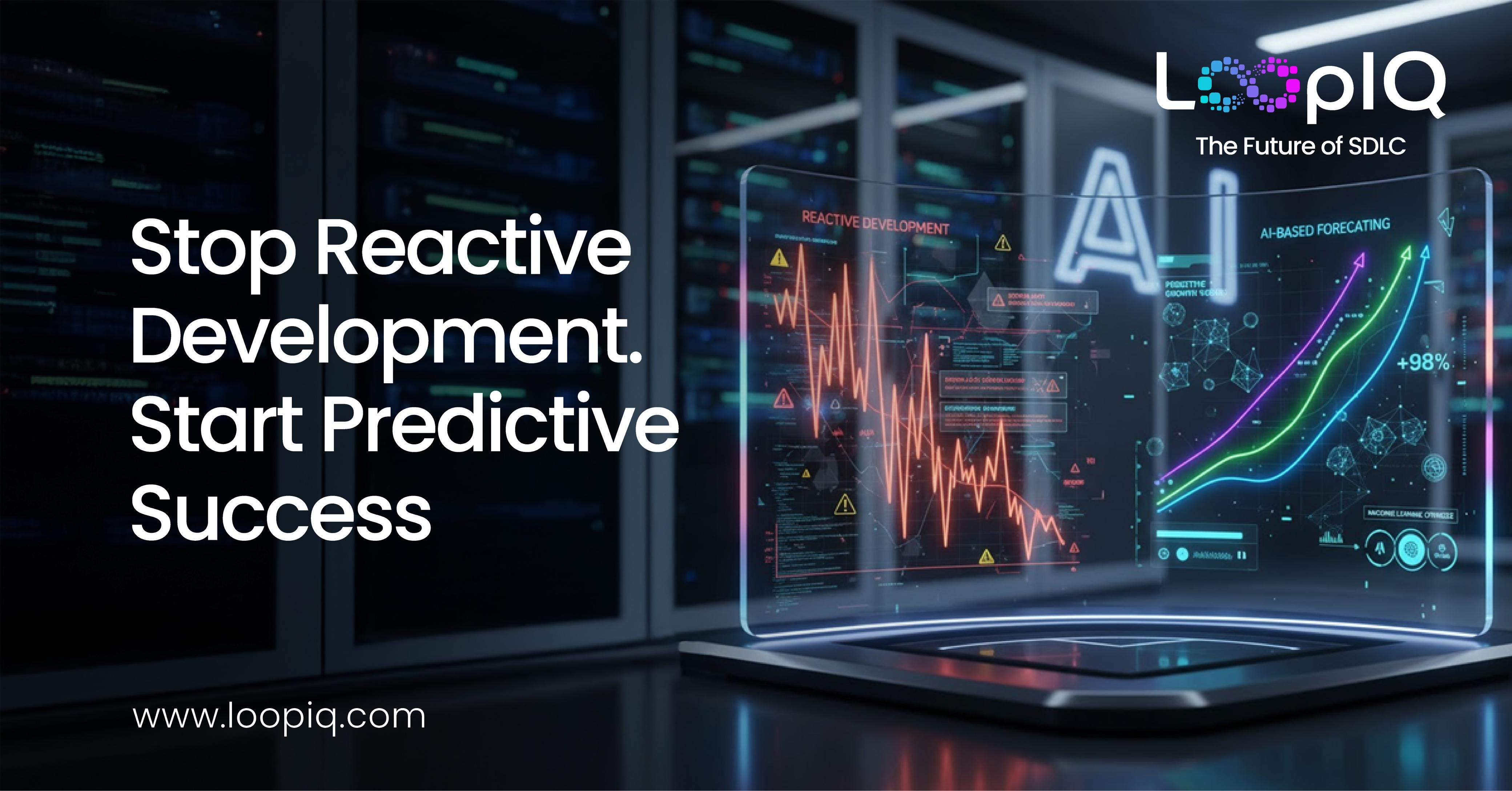
In the high-stakes world of software development, where only 31% of projects succeed and failure can cost millions, the race to anticipate problems before they escalate has never been more critical. Enter predictive development, an AI-powered approach that transforms how development teams identify, assess, and mitigate risks before they derail entire projects.
The software development landscape is undergoing a revolutionary transformation. While traditional risk management methods rely on reactive approaches and periodic assessments, artificial intelligence is enabling proactive risk prediction with unprecedented accuracy. Organizations implementing AI-driven predictive controls are witnessing 28% fewer project failures and achieving cost reductions of up to 9% in overall project expenses.
The Evolution of Risk Management in Software Development
Traditional software development has long struggled with the challenge of identifying risks early enough to prevent project derailment. Up to 60% of project failures stem from poor requirements management, while countless others fall victim to scope creep, resource constraints, and integration challenges that emerge unexpectedly during development cycles.
Infographic showing the predictive analytics value chain from data analysis to future risk prediction
The conventional approach to risk management typically involves:
· Periodic risk assessments and manual reviews
· Expert judgment based on historical experience
· Reactive problem-solving after issues surface
· Static risk registers that quickly become outdated
However, this reactive model has significant limitations. By the time human managers notice substantial problems, projects may already be in critical condition. The complexity of modern software systems, coupled with accelerated development timelines, demands a more sophisticated approach.
AI-powered predictive development represents a fundamental shift from reactive to proactive risk management. By leveraging machine learning algorithms, natural language processing, and advanced analytics, development teams can now identify potential risks weeks or even months before they would traditionally surface.
How AI Transforms Risk Detection
Pattern Recognition and Historical Analysis
Modern AI systems excel at processing vast amounts of historical project data to identify patterns that precede project failures. Machine learning algorithms analyze thousands of variables, including:
· Past project timelines and performance metrics
· Resource allocation patterns and utilization rates
· Code complexity indicators and quality measurements
· Team composition and collaboration patterns
· Budget expenditure trends and financial anomalies
Research from FormAI analyzing 112,000 C programs found that 51.24% of AI-generated code contained at least one security vulnerability, highlighting how AI can identify both opportunities and risks in development processes.
Real-Time Monitoring and Anomaly Detection
Unlike traditional periodic reviews, AI systems provide continuous monitoring of project health indicators. Natural Language Processing (NLP) tools can analyze project documentation, emails, and communication records to detect early warning signs such as:
· Changes in team sentiment and communication patterns
· Increasing frequency of requirement modifications
· Delays in milestone achievements
· Unusual budget consumption patterns
A compelling example comes from Anthem Blue Cross, where AI identified integration issues 45 days earlier than conventional reporting methods, ultimately saving $4.7 million and preventing a four-month delay.
AI-driven cybersecurity framework illustrating predictive risk anticipation and mitigation in software development
Predictive Analytics and Scenario Modeling
AI-powered predictive analytics go beyond simple pattern recognition by modeling various risk scenarios and their potential impacts. These systems can:
· Forecast timeline delays based on current development velocity
· Predict resource shortages before they become critical
· Identify integration risks through dependency analysis
· Model the cascading effects of potential failures
Meta’s Diff Risk Score (DRS) system exemplifies this approach, using a fine-tuned Llama LLM to evaluate code changes and predict the likelihood of production incidents. This AI-powered technology has enabled Meta to eliminate major code freezes while maintaining system stability.
Key Risk Categories AI Can Predict
1. Security Vulnerabilities and Code Quality Issues
AI systems are particularly effective at identifying potential security vulnerabilities and code quality problems before they reach production. AI-powered Static Application Security Testing (SAST) tools have demonstrated the ability to reduce security flaws by up to 50%. However, organizations must remain vigilant. Research indicates that 32% of GitHub Copilot-generated code snippets contain potential security vulnerabilities, emphasizing the need for robust review processes.
Addressing the AI Risk Paradox
While generative AI dramatically speeds up development, its integration introduces new risks that must be proactively managed. The research highlighting that 32% of GitHub Copilot-generated code snippets contain potential security vulnerabilities and that 17% of repositories have developers using AI tools without proper code review underscores this paradox.
A comprehensive predictive development platform does not simply use AI; it uses AI to govern AI. Key methods include:
a. Real-Time SAST for AI-Generated Code:
AI-powered SAST tools are deployed to immediately scan any code snippet generated by an LLM or an AI-coding assistant, preventing vulnerabilities from entering the main codebase.
b. Automated Review Enforcement:
The platform ensures that proper code review processes are automatically triggered and enforced whenever AI-generated code is introduced, closing the gap where developers might skip essential validation.
c. Continuous Anomaly Detection:
By establishing baseline patterns of code quality, the system identifies anomalies that suggest a high volume of unvalidated or low-quality AI output, sending immediate alerts to the risk management team.
By applying predictive controls to the outputs of generative AI, organizations transform a potential liability into a manageable and accelerated development asset.
2. Resource and Timeline Risks
Petrobras successfully used AI monitoring for a deep-water equipment installation, detecting unusual patterns 37 days before operational failure would have occurred, preventing $8.8 million in remediation costs.
3. Integration and Technical Debt Accumulation
Studies show that 17% of repositories within organizations have developers using AI tools without proper code review processes, creating potential integration risks that predictive systems can identify early.
Beyond integration, AI provides unprecedented capabilities to quantify and manage technical debt. Instead of relying on subjective judgment, predictive analytics transforms technical debt from an abstract concept into a measurable risk by analyzing key code metrics:
a. Code Complexity Indicators:
AI algorithms analyze factors like cyclomatic complexity and module coupling to identify overly complex or tightly integrated components. These components are predictors of future maintenance overhead and potential failure points.
b. Change Frequency and Stability:
Machine learning models track how often specific parts of the codebase change. High-churn areas with high complexity indicate accumulated technical debt that is starting to affect stability.
c. Dependency Analysis:
Predictive systems map dependencies across the software architecture to identify integration risks and determine which components are most likely to cause cascading failures.
By translating these technical indicators into a financial or time-based impact score, AI allows managers to prioritize debt remediation based on its predicted risk to the project timeline and budget, not just developer preference.
4. Industry Impact and Success Stories
The adoption of AI-powered predictive development is accelerating across industries, with the AI Model Risk Management market projected to grow from $5.47 billion in 2023 to $12.57 billion by 2030, representing a 12.6% CAGR.
Healthcare Technology
The UK’s NHS implemented AI monitoring during a major Electronic Health Record implementation across Greater Manchester hospitals. The system detected deteriorating data quality and concerning help desk patterns 62 days before issues would have impacted the main deployment, ultimately saving £2.2 million and accelerating deployment by three months.
Financial Services
Capital One utilized AI-powered MLOps to deploy real-time fraud detection models, resulting in a 40% reduction in fraudulent transactions while significantly increasing customer trust and satisfaction.
Predictive development lifecycle stages: analysis, design, implementation, testing, and maintenance, shown in a sequential flow diagram
Enterprise Software Development
Organizations implementing comprehensive AI-driven risk management report remarkable results:
The Technology Stack Behind Predictive Development
Predictive development is powered by machine learning, advanced analytics, and seamless integrations. Models like Random Forest, LSTM, and neural networks process diverse project data for accurate risk prediction, while ensemble techniques enhance overall forecasting ability.
Natural Language Processing
NLP tools unlock risk signals from requirements, communications, and project documentation. Automated sentiment and text analysis enable teams to address gaps and emerging issues before they escalate.
Predictive Analytics Platforms
Integrated platforms provide real-time visibility, automated alerts, and support rapid scenario modeling. By connecting code reviews, performance metrics, and workflows, they help teams prevent small problems from becoming major risks.
Implementation Best Practices
Success begins with clear, measurable objectives and benchmarking. Reliable predictions depend on disciplined data management, ensuring quality, privacy, and standardization throughout the lifecycle. Strong collaboration and ongoing training across development and risk management teams are essential, as is a phased rollout and regular process of refinement.
Overcoming Challenges
Standardized data, normalization tools, and persistent governance keep information usable and trustworthy. Changing management and technical planning ensures that teams adapt easily, and platforms integrate smoothly with existing workflows.
The Future & ROI
AI-driven development will continue to advance, adding automation and deeper integration with DevOps. Industry best practices, compliance standards, and performance metrics will drive sustained value. Organizations adopting AI can expect significant ROI, with leading research showing up to 3.5x gains from improved efficiency and faster delivery.
Getting Started
i. Begin with a focused risk assessment and team readiness review.
ii. Run targeted pilot projects using scalable, secure solutions.
iii. Expand strategically as expertise grows, leveraging predictive development to create lasting competitive advantage.
LoopIQ: Unified & Intelligent
As the AI-driven risk management market evolves, platforms like LoopIQ stand out by unifying the entire software development lifecycle.
The complexity of modern projects often leads to tool fragmentation, which slows down teams and obscures emerging risks. LoopIQ solves this by integrating powerful AI for automation, predictive insights, and compliance.
LoopIQ’s customer-centric, collaborative approach streamlines workflows and eliminates fragmentation, enabling your teams to build better software, faster, and with greater confidence. Position your organization ahead in the age of predictive development.